
The Jurisdiction of Flesh: How They Use/d Bones to Build the Constitution
On the 14th Amendment, Clarence Thomas’s dissent, Indigenous erasure as legal precedent, and the coordinated dismantling of rights
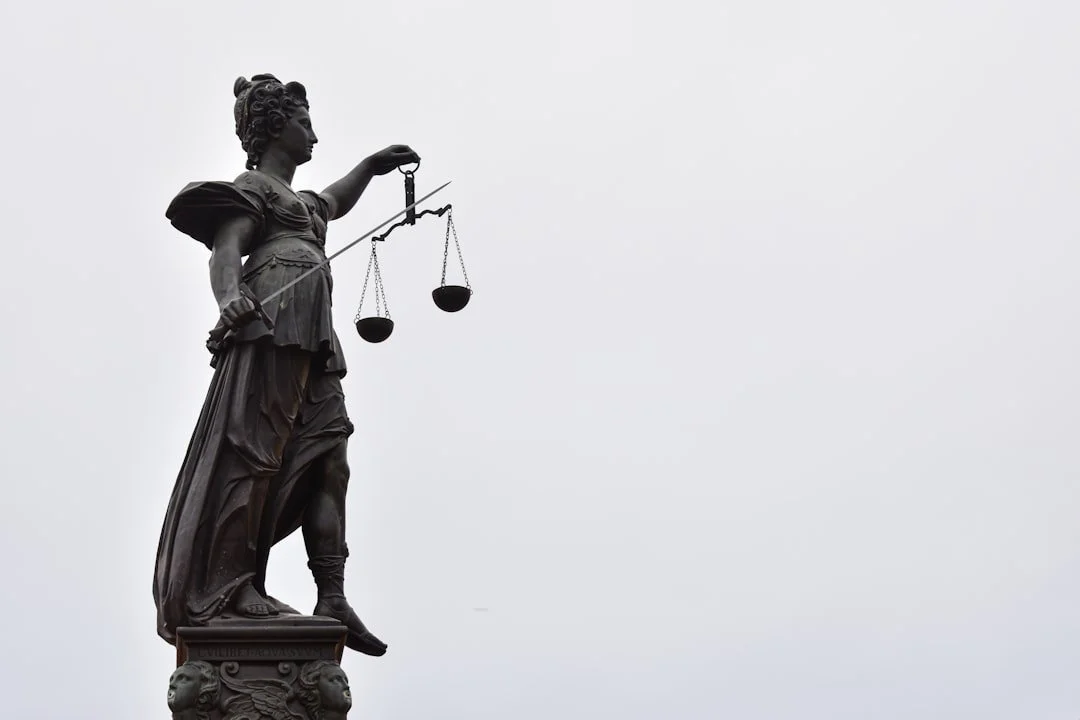
Photo by Gaétan Marceau Caron on Unsplash
I have been thinking about ghosts.
Not the kind that rattle chains in horror films — the kind that wear robes. The kind that sit in marble rooms and read old sentences aloud as if language is neutral, as if words do not carry the weight of every body that was excluded when they were first written. The kind of ghost that says we are only following the text while the text was written in the shadow of a whip.
Today is June 30, 2026, and the Supreme Court issued its final rulings of the term. Birthright citizenship was upheld, 6–3. Trans girls are still banned from sports, 6–3. And in the birthright case, Justice Clarence Thomas filed a 91-page dissent that I have not been able to stop thinking about — because in it, he did something the administration had been too careful to do out loud: he named Black people explicitly. He said the 14th Amendment was for the formerly enslaved, and for them specifically, and that expanding it to cover the children of undocumented immigrants and temporary visa holders was a misuse of a race-conscious remedial measure.
I want to sit with that. I want to sit with all of it. Because what happened today — the win and the dissent and the trans ban all in the same morning — is not simple, and I will not let it be flattened.
I want to tell you what I see when I look at the whole picture.
I. The Amendment That Was Never For Us, Until It Was
Let me begin with what the 14th Amendment actually was.
In 1857, the Supreme Court issued Dred Scott v. Sandford — arguably the most violent legal ruling in American history. Chief Justice Taney held that no Black person, enslaved or free, could ever be a citizen of the United States. That the nation’s founding documents were written by white men for white men, and that this was not a defect to be corrected but a feature to be preserved. That a Black man “had no rights which the white man was bound to respect.”
The 14th Amendment, ratified in 1868, was written as a direct repudiation of Dred Scott. It said: All persons born or naturalized in the United States, and subject to the jurisdiction thereof, are citizens. Chief Justice Roberts quoted this history in today’s majority opinion: “What the Civil Rights Act began, the Fourteenth Amendment, and its repudiation of Dred Scott, would finish.”
This is not ancient history. It is the legal foundation of every Black American’s citizenship. It is the constitutional promise that was extracted from the bloodshed of the Civil War. It is, at its core, a reparative act — an admission that the nation had built itself on the legal non-personhood of Black people and that this had to end.
And Justice Thomas — the only Black justice on the Court, a man who was himself only able to sit on that bench because of the amendment he is now reinterpreting — argued in his dissent that this reparative act was never meant to extend to the children of immigrants. That its scope was deliberately, specifically racial: for freed slaves, for people who had no other homeland, for people who had been forcibly stripped of every other allegiance and owed everything to and were fully subject to this nation.
He cited Frederick Douglass. He cited the Civil Rights Act of 1866. He wrote: “Blacks were entitled to citizenship because they were here. They had no other homeland, owed no allegiance to any foreign power, and were subject to no other authority.”
And then he argued that this logic — the logic of no-other-homeland — cannot extend to undocumented immigrants or temporary visa holders, whose presence here is, in his framing, provisional and foreign-aligned.
I need to be honest about how complicated this is. Because Thomas is not wrong that the amendment was specifically about Black people. He is not wrong that the history of the 14th Amendment is a history of Black suffering and Black political demand. The Congressional debates he cites are real. Frederick Douglass’s advocacy for Black citizenship was real. The specific horror of Dred Scott — which said that a Black man could be property, that Black people existed outside the legal category of “person” — was the wound the amendment was written to close.
But what Thomas is doing with that truth is something else entirely.
II. The Weaponization of Black History
Justice Jackson, in her concurrence joined by Justice Sotomayor, was direct: she said Thomas’s argument bore “little relationship to the history of its ratification” and called it what it is — a selective, narrow reading of a broad constitutional text, one that uses Black specificity to deny protection to everyone else.
Here is the move Thomas is making, and it is important to name it clearly: he is taking the most radical, expansive promise the Constitution has ever made — that birth on this soil confers belonging — and narrowing it to a very specific population, on the grounds that the amendment was originally about them. He is using Black people’s particular history of dispossession to argue that the dispossession of others is constitutionally permissible.
Sylvia Wynter would call this an act of overrepresentation — but in reverse. Usually, the critique is that “Man” (Western, white, propertied) is overrepresented as the universal human. Here, Thomas is overrepresenting a specific Black history to make it do work it was never designed to do: to build a wall around constitutional belonging, to say the amendment was for this group, not that one, not that one either.
Roderick Ferguson’s Aberrations in Black teaches us that the state often uses the political demands of one marginalized community as the basis for managing, containing, or denying the claims of others — that the inclusion of some “respectable” or “legible” members of a community often happens at the expense of those deemed aberrant. Thomas is performing a version of this move at the highest level of law: accepting Black citizenship as settled, and using that settledness to delegitimize the citizenship claims of immigrants, the undocumented, the temporarily present.
The Roberts majority did not let it stand. Roberts explicitly quoted Arendt without naming her when he wrote: “Citizenship then and now was the right to have rights — to freely participate in our political community.” He held that the amendment’s promise extends to all children born on this soil, regardless of their parents’ legal status. The majority won today.
But Thomas’s 91-page dissent is not going away. It is a roadmap. It is a document that tells future litigants, future legislatures, and future justices: here is how you narrow this promise. Here is how you do it using the language of civil rights. Here is how you use Black history as a gate rather than a door.
III. The Ghost of Elk v. Wilkins
And this is where the other part of the story comes in. Because Thomas’s argument about Black people’s exclusive claim to the amendment did not emerge in a vacuum. The administration had already laid the groundwork by pointing to a different history of exclusion: Native Americans.
In 1884, a Winnebago man named John Elk left his tribal nation, moved to Omaha, Nebraska, renounced his tribal ties, and tried to register to vote. He said: I am here. I was born here. The amendment says I am a citizen.
The Court said: No.
The Court said that because John Elk had been born into a tribal nation — a sovereign within a sovereign — he was not truly subject to the jurisdiction of the United States at birth. He owed his allegiance elsewhere. He was not fully under U.S. authority. He was not, in the constitutional sense, one of us.
They did not say this was about race. They never say it is about race. They said it was about allegiance. About domicile. About where one’s loyalty ultimately lives.
The Trump administration’s Solicitor General stood before the Court in April and pointed to Elk v. Wilkins and said: here is your precedent. Here is how the “subject to the jurisdiction” clause was originally interpreted. Here is how you can narrow it now — for immigrants whose parents owe allegiance elsewhere, just as tribal members were deemed to owe allegiance to their tribal sovereign.
This is breathtaking in its cynicism. They used the most violent, most racist exclusion in the amendment’s history — the deliberate denial of citizenship to Indigenous people, rooted in the explicit belief that they were not civilized enough, not assimilated enough, not ours enough — as the legal template to strip citizenship from the children of immigrants today.
Patrick Wolfe taught us that settler colonialism is not an event — it is a structure. The logic of elimination does not announce itself. It rewrites the property deed. It adjusts the classification. It reinterprets the clause. The legal exclusion of Native Americans from birthright citizenship was not corrected until the Indian Citizenship Act of 1924 — not by the Constitution, but by a statute that a future Congress could repeal. The Native American Rights Fund has noted that the government’s argument in this case raised a question it could not clearly answer: under the “domicile and allegiance” test, do Native Americans have constitutional birthright citizenship at all — or only the statutory kind?
The structure of elimination continues.
IV. The Speculative Present
Let me imagine something with you.
Imagine you could walk the halls of the Supreme Court building today — the last day of June, 2026 — and you could see all the people the rulings are about. Imagine they are gathered there. Imagine Dred Scott, still waiting to hear whether he is a person. Imagine John Elk, still standing at that clerk’s office in Omaha, still being told the amendment’s promise was not written for him. Imagine the ancestors of every tribal member who was denied citizenship until Congress acted in 1924. Imagine the trans girls who played soccer last season and don’t know yet if they can next fall. Imagine the babies born last night whose citizenship was, until this morning, genuinely uncertain.
Imagine the building is haunted. Imagine that is not a metaphor.
Sylvia Wynter asked us to understand that the West did not just colonize land — it colonized the very concept of the human. It created a figure it called Man — propertied, European, heteropatriarchal, able-bodied — and then it wrote that figure into the architecture of every institution it built. The question “who is a citizen?” has always been downstream of the question “who is human?” And the question “who is human?” has always been answered in the same direction: toward those who already hold power, and away from those who threaten, transgress, or refuse it.
This is not paranoia. This is the historical record.
The Court excluded Black people from citizenship in Dred Scott (1857). The amendment was written specifically to correct that in 1868. Within sixteen years, the Court had already excluded Native Americans from it in Elk v. Wilkins (1884). It took Congress until 1924 to grant Indigenous citizenship by statute. Seven states still refused to let Indigenous people vote for years after. Women were not “persons” under the original amendment either. And today, in 2026, the Court upheld birthright citizenship — barely, 6–3, against a sustained constitutional attack — while simultaneously banning trans girls from sports 6–3.
Each time, the method is the same: find a clause. Reinterpret it. Apply the lowest possible scrutiny to the people you want to exclude. Use the history of one community’s exclusion as precedent for the next.
Achille Mbembe calls this necropolitics: the sovereign power to decide who may live and who must die, who is legible to the state and who is rendered disposable. Necropolitics does not always announce itself as death. Sometimes it announces itself as a technicality. Sometimes it announces itself as a visa status, a birth record, a sports eligibility form, a 91-page dissent.
The trans girl who cannot play soccer is not dead. But she has been told her body is a problem for the state to manage. She has been told her existence requires regulation. That is necropolitics dressed in judicial language.
V. What My Body Knows
I want to be honest with you about what it feels like to watch this as a disabled, queer Boricua woman who has spent years learning the names for what has always been done to people like me.
There is a particular exhaustion in having the language. In knowing Arendt and Mbembe and Wolfe and Wynter and Ferguson and still having to sit with the television on and wait for a ruling. Knowledge does not protect you from the knife. It just means you can name it while it’s cutting.
Roderick Ferguson taught me that the state uses normalization as a tool of management — that institutions regulate not just behavior but being, that the “aberrant” body (queer, racialized, nonconforming, disabled) is constituted as such by the regulatory gaze of state power. The Court’s refusal to apply meaningful scrutiny to laws targeting trans people is not neutral legal analysis. It is a choice to let the normalization machine operate without having to justify itself.
My body has been managed. My queerness has been called a phase, a confusion, a condition. My disability has been called a tragedy, an individual failure, a reason I cannot access spaces that were built for someone else. My Boricua inheritance has been called foreign even here, even on this continent where my people’s relationship to land and belonging precedes the nation that claims to contain us.
And so I know — not academically, not theoretically, but in the marrow — what it means to be told that you are subject to the jurisdiction of a law that does not recognize you as fully real.
This is what Dred Scott knew. This is what John Elk knew. This is what every trans girl trying to play soccer knows. This is what Justice Thomas, in his dissent, risks doing to both the children he claims to be protecting and those he is explicitly excluding: drawing lines around whose dispossession counts, whose history matters, whose belonging the Constitution was written to protect.
Hannah Arendt wrote that statelessness is the most modern of conditions — that once a people is stripped of the political community that grants them rights, what remains is only bare life, naked, unprotected, rightless, and the question of their humanity becomes one the state can answer however it chooses. Roberts quoted her today without naming her. Thomas’s dissent, if it had prevailed, would have made Arendt’s warning true for millions of children born on American soil.
VI. The Architecture of the Loophole
Here is the sinister genius of what is happening — and I use “genius” the way you would use it for a disease that has learned to evade the immune system.
The 14th Amendment has two main pillars. The Citizenship Clause says: be born here, be a citizen. The Equal Protection Clause says: once you are a person in this jurisdiction, you are entitled to equal protection.
Today, the Citizenship Clause survived — barely. The Equal Protection Clause did not fare as well.
In United States v. Skrmetti last year, the Court held that banning gender-affirming care for trans youth only requires rational basis review — the lowest constitutional bar, almost impossible to fail. By refusing to classify trans discrimination as sex discrimination, the Court said: we will not look hard at what you are doing to these people. And today, the trans athletes ruling followed the same logic: states may categorically exclude trans girls from girls’ sports without triggering serious scrutiny.
These two attacks — on citizenship and on equal protection — accomplish the same thing from different directions. They reconstruct a two-tiered legal system. In tier one: people whose belonging is unquestioned, whose equal protection is scrutinized seriously. In tier two: everyone else.
Thomas’s dissent tried to build tier two using Black history. The administration tried to build it using Indigenous history. The trans rights rulings are building it using the pretense that trans discrimination is not really discrimination at all — just neutral medical and athletic regulation.
Different methods. One project. And the project is always the same question: who counts as fully human here?
VII. What the Ghosts Want
I keep coming back to something Justice Jackson wrote in her concurrence today. She called Thomas’s argument about the amendment’s racial scope what it is: a narrow vision that bears little relationship to the history of ratification. She said the amendment was not a ceiling — it was a floor. It was the minimum promise, not the maximum. And she was right.
The people who wrote the 14th Amendment knew that they were writing in the immediate aftermath of one specific atrocity — the enslavement of Black people and the legal architecture of Dred Scott. But they wrote broadly because they understood that the logic of exclusion does not stop with one group. That once you build the machinery of legal non-personhood, it will be used again. And again.
The ghosts in that courtroom today are not asking for vengeance. They are asking for something harder: for us to see the structure. To see how the exclusion of one community is always used to build the framework for the exclusion of the next. To see that “allegiance” and “domicile” and “rational basis” are not neutral legal concepts — they are technologies of belonging, and they have always been calibrated to keep the wrong people out.
The Roberts majority kept the door open today. But Thomas’s dissent — all 91 pages of it — is a blueprint. It tells us exactly how this argument will return: through Black history, through the specificity of slavery, through the claim that the amendment’s reparative purpose was narrow and should stay that way.
We have to understand what is being done with that history. We have to hold both truths at once: yes, the 14th Amendment was written because of what was done to Black people, and that history is sacred and specific and must never be erased. And also: the amendment’s promise was written broadly because narrow promises had already failed, because the framers knew that any legal architecture of belonging that drew lines would be used against those who crossed them.
There is a spell being cast in that marble building. It is old magic, colonial magic — the magic of definition, of naming, of drawing lines around who counts as real. Some of us won today. But some of us are still outside the fence. And the people drawing the lines have not stopped drawing.
I am a disabled queer Boricua woman. I know what it means to be outside the jurisdictional line. I know what it feels like when the state looks at your body and sees a problem to be managed. I know the exhaustion of knowing the names for what is being done to you.
And still — I am here. My daughter is here. John Elk’s people are here. The trans girls are here. The babies born last night are here, citizens as of this morning, for now.
We were never not subject to this land. The land knows us even when the law pretends otherwise.
They cannot legislate our belonging out of existence, no matter how many clauses they reinterpret. But we have to see what they’re doing. We have to say it out loud. We have to refuse the fiction that these rulings are separate — that they are about sports and immigration and healthcare and not about the same old question, asked again and again by people with power who cannot stop asking it:
Who counts as fully human here?
And we have to keep answering back.
mav is a sociologist, poet, and community organizer based in the DMV. their work lives at the intersection of disability justice, queer of color critique, and the radical imagination.
what the fk. is a reader-supported publication. To receive new posts and support my work, consider becoming a free or paid subscriber.
